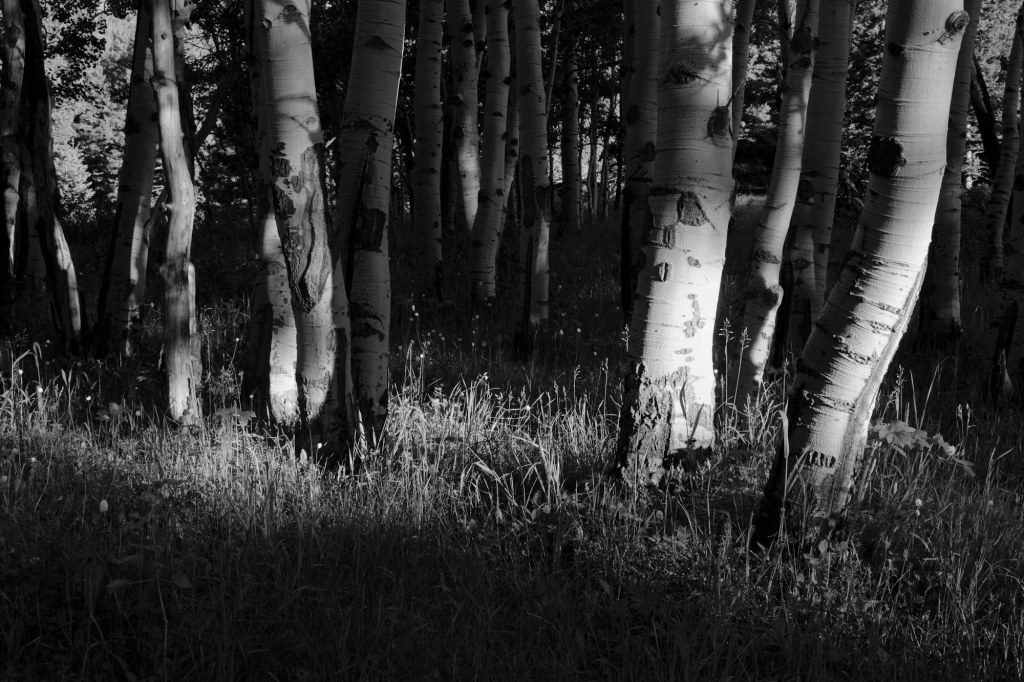
One of my favorite black and white images from Ansel Adams is a simple two-dimensional perspective of an aspen forest captured from New Mexico in 1958. The image is clean, simple, and shows two younger trees at different stages of dropping leaves. It is a brilliant photograph and I took inspiration from this image to explore the shapes, patterns, and other nuances of these beautiful organisms.
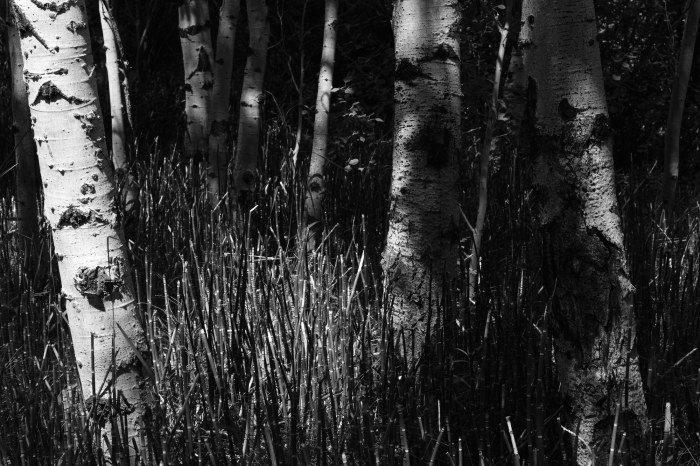
One of the main challenges is finding the right location. Some of the best looking groves of trees are on private land. Others are public land but may be difficult to access. Another challenge is flora. Too much undergrowth will compete with the bright trunks of the aspens. Ideally, I want short grasses and very little brush. Flowering plants and large leafy plants can complement the main subject, but composition is key to balancing the elements in the frame.
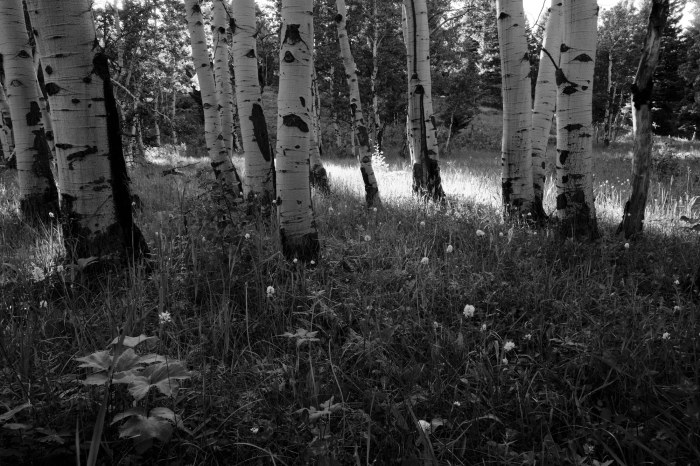
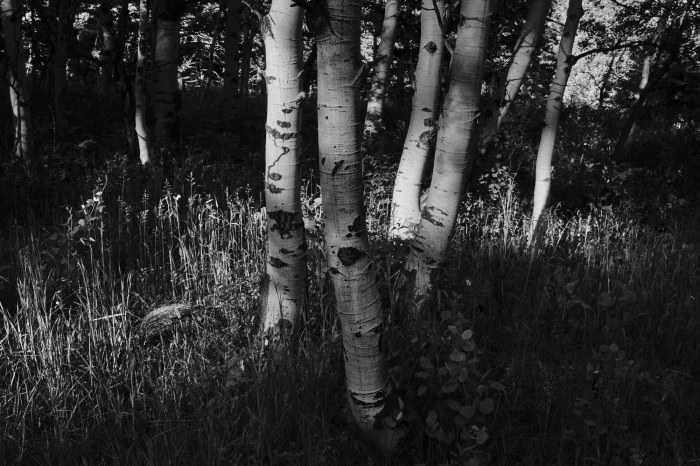
Another major challenge is light. Aspen bark is bright–nearly white. This factor invites black and white options since it is easy to separate the trunks from the undergrowth. In fact, the only time I take photos of aspens in color is during the autumn when the leaves are bright yellow.
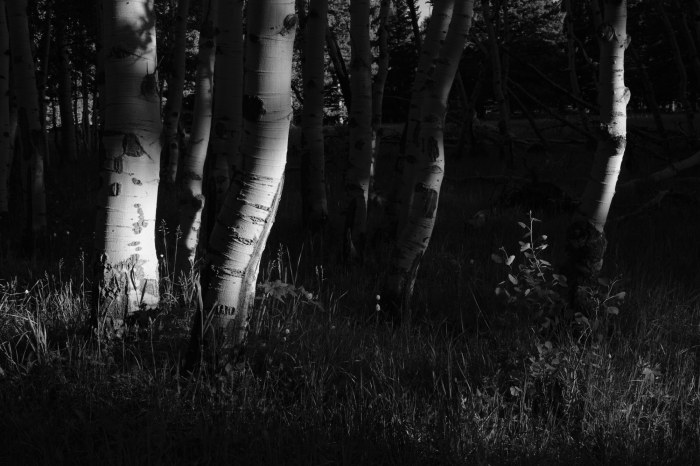
Evening or early morning light creates prime lighting conditions for isolating the trunks. Conversely, overcast or cloudy conditions creates flat tones, which muddies the distinctions between the trees and other elements.
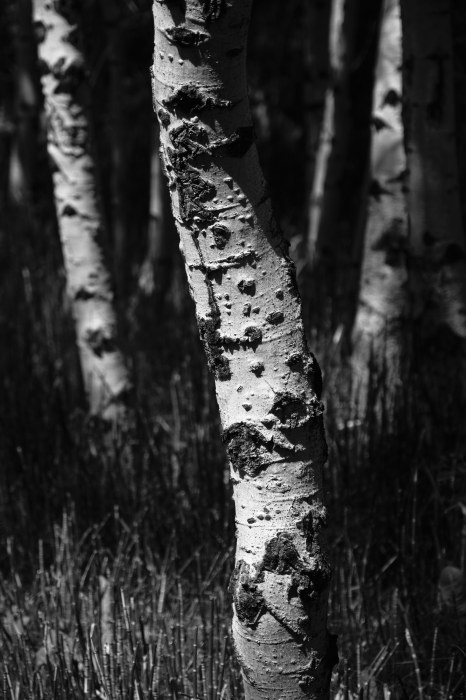

Tips for photographing aspen groves
- Look for photos on Google Maps to help you find prime aspen groves in public lands near you.
- Experiment with various focal lengths and lenses.
- Try to avoid bright background elements behind your main subject matter.
- Use a tripod to help you make micro decisions in composition and framing. This also gives you flexibility to increase the f-stop for sharper images.
- Look for other flora elements to include in the frame.
- Look for patterns or repetition.
- If your camera has an EVF, try switching your color style/film simulation to black-and-white to see how the subject interacts tonally.
Other Considerations
- Try utilizing an off-camera flash for those flat day or night time photography.
- Look for elements that tell a story (like the two saplings in Adam’s photograph).
- Ultra-wide lenses tend to invite busy elements with no coherence. Be specific with that you want in your frame.
- Utilize spot metering in low directional lighting conditions.
While I haven’t captured an image to satisfy my aspirations, I am enjoying the journey. I hope you will enjoy your’s, too.
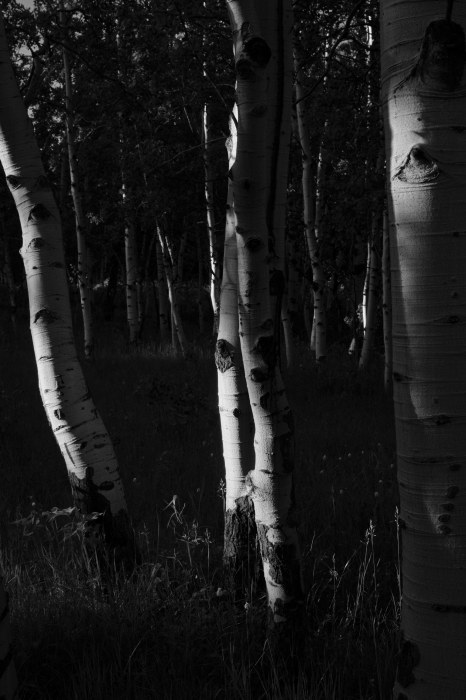
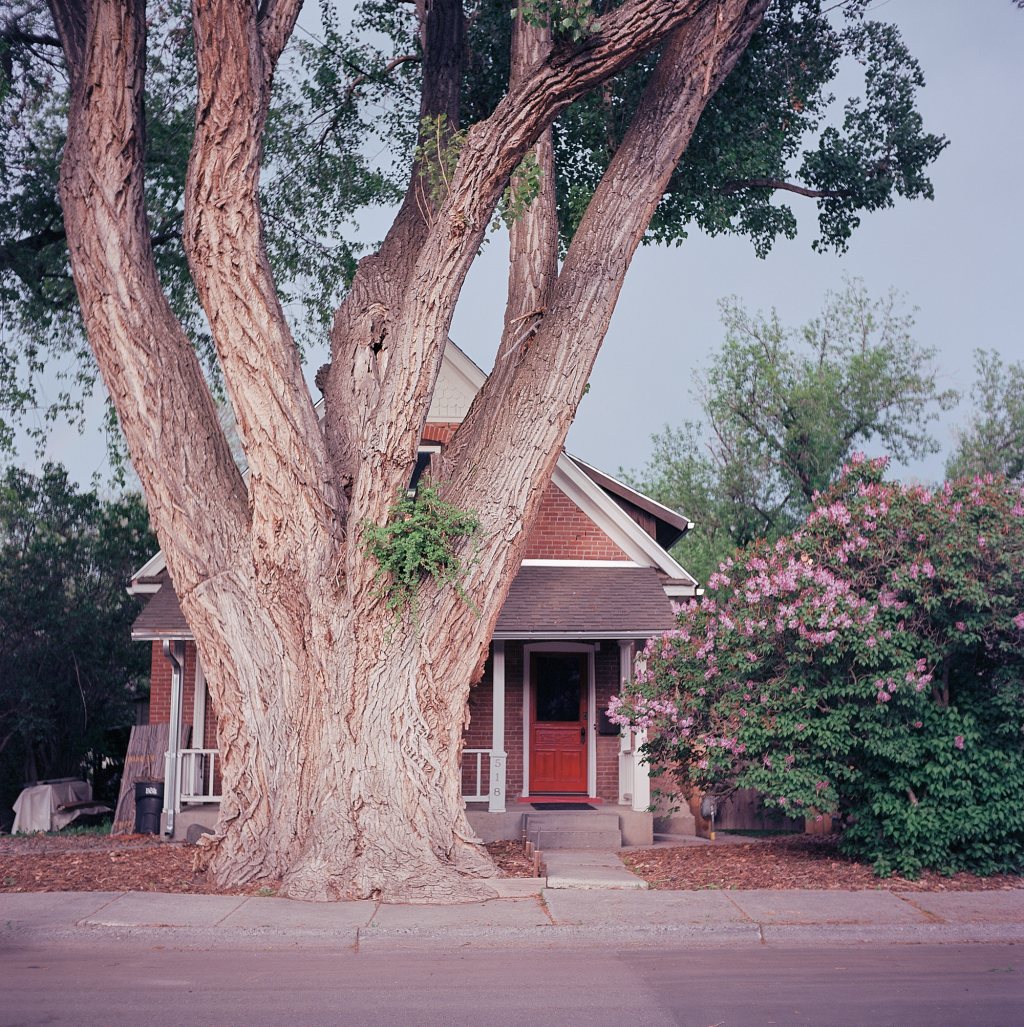
Click an image to view the gallery full screen:



 Justin Sheely
You must be logged in to post a comment.