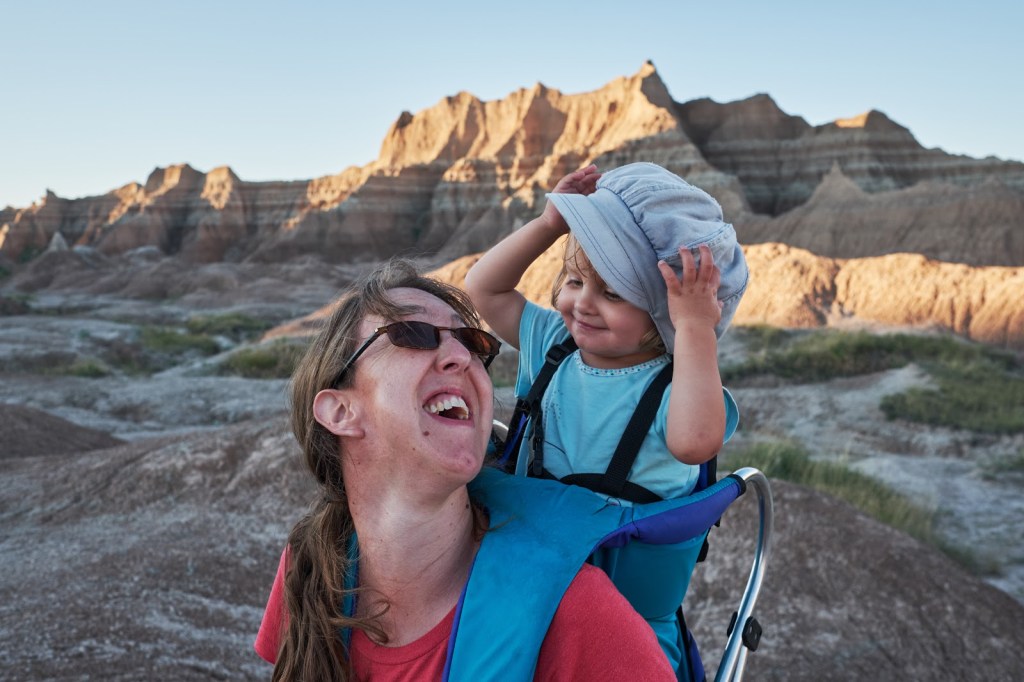
We just finished a vacation in the Black Hills/Rapid City area with our daughter and it was amazing!
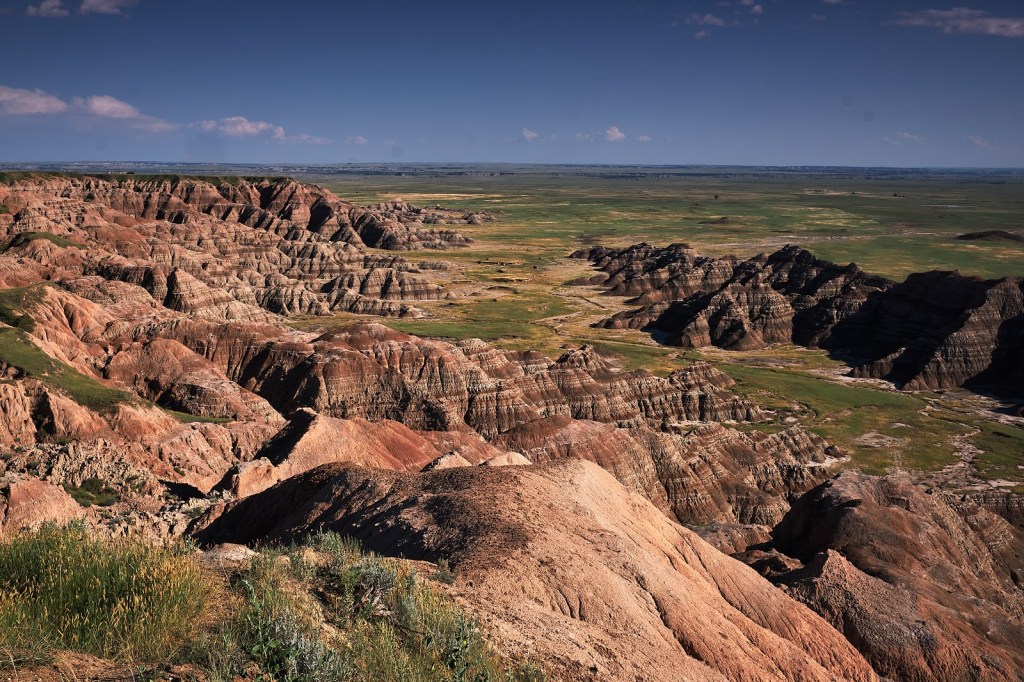
One of the highlights of the trip was an evening in the Badlands National Park, South Dakota.
Established in 1929, Badlands National Park is a 244,000-acre photographer’s playland abounding with buttes, formations, and wildlife.
The best times to photograph the Badlands, like many landscapes, are around sunrise and sunset. Magic hour is around 6 – 7 p.m. when the sun is really low to the horizon which creates deep shadows and warm colors from the formations.
Landscape photography tips:
- Don’t use lenses with too wide of an angle. This can make formations and mountains appear to be smaller or further away than they actually are. I shot most of my images with a 35mm equivalent lens.
- Don’t overexpose, in fact, try to underexpose by about 1/3 of a stop. Rock formations will keep their color and it is easier to recover shadow detail than highlights.
- Don’t fall into the trap of finding the obligatory foreground interest (e.i. flowers, logs, cactus) to fit into every frame. Sometimes they work, but let the environment and the feeling of the moment lead your composition decisions.
- Use a small f-stop for sharp landscapes and greater depth of field but don’t use the smallest f-number on your lens. Using the smallest f-number does not mean the sharpest photos.
- Use a tripod, especially if using filters.
- Polarizing and graduated filters can help at contrast and tonality to a photo but are not critical.
- Shoot in the RAW camera setting on your camera for maximum color and dynamic range control when editing your photos.
Editing your photos:
- Avoid over saturating your images. Use the highlight/shadow clipping warning feature in Lightroom or editing program to avoid this.
- Remember to straighten your horizon and use the crop tool to remove any distracting elements.
- Add a little ‘S’ curve using the curves tool in your editing program to add some tonal depth. This will also add some saturation to the rocks.
- Use the highlight/shadow recovery sliders in your editing program in tandem with the curves tool to achieve the desired tonal balance.
Touring the Badlands.
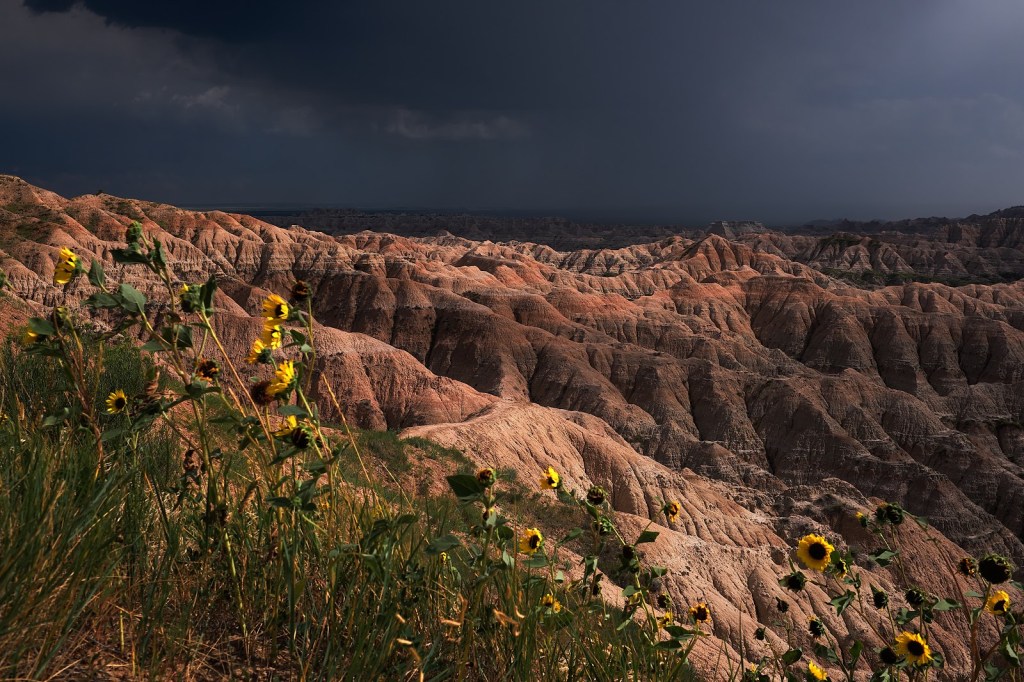
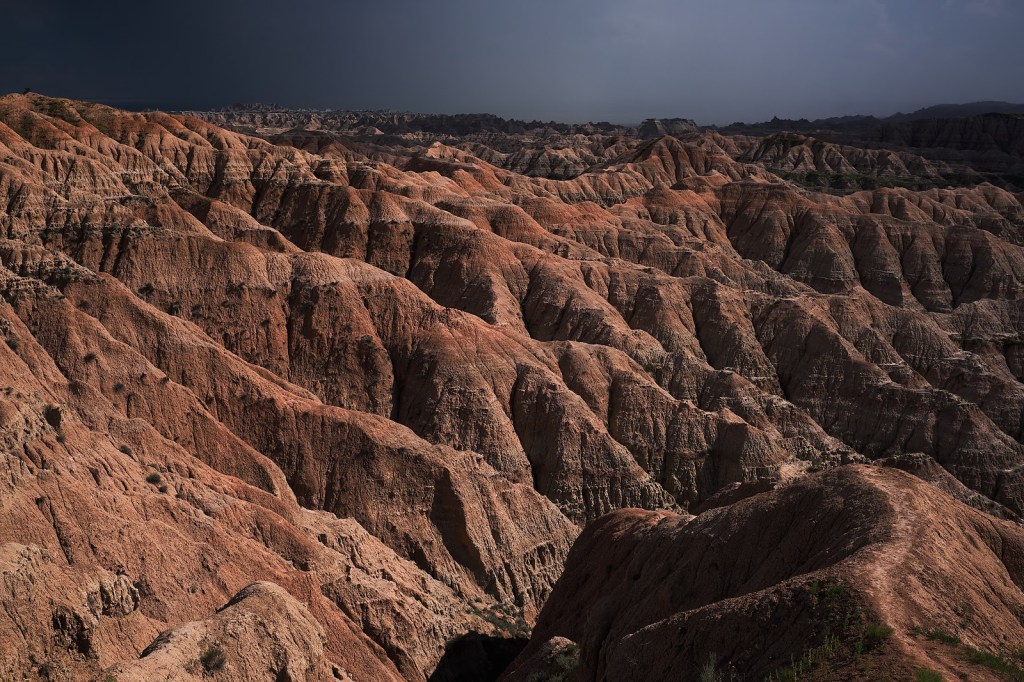
We arrived via the Pinnacles entrance around 5 p.m. and headed to the west and stopped at the Hay Butte outlook to watch a passing thunderhead darken the horizon. This lent a dramatic tone to the landscape and added some dynamic lighting. I whipped out my trusty Fujifilm X-T2 camera and tripod and got to work.

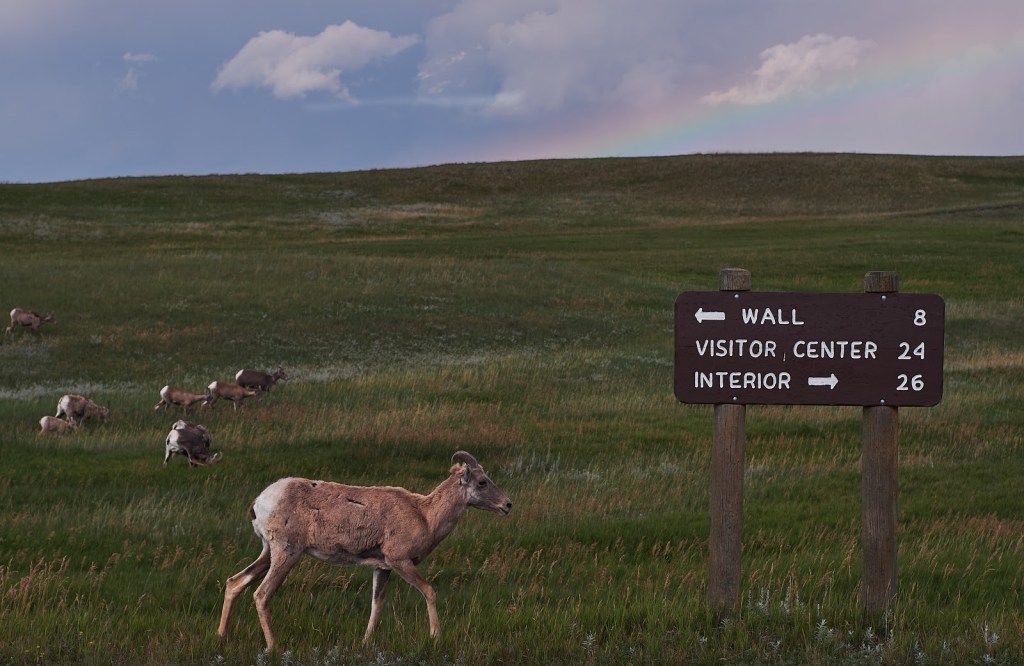
And, of course, there were some Bighorn sheep along the way.
We proceeded east to Big Foot pass to picnic but pulled over at a few places along the way.
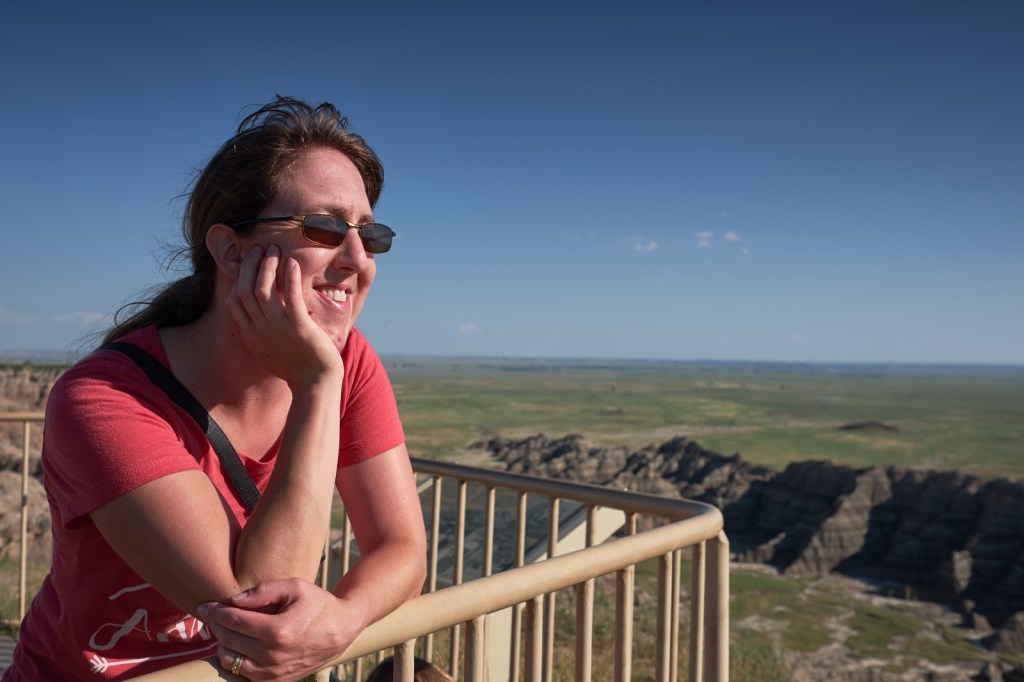
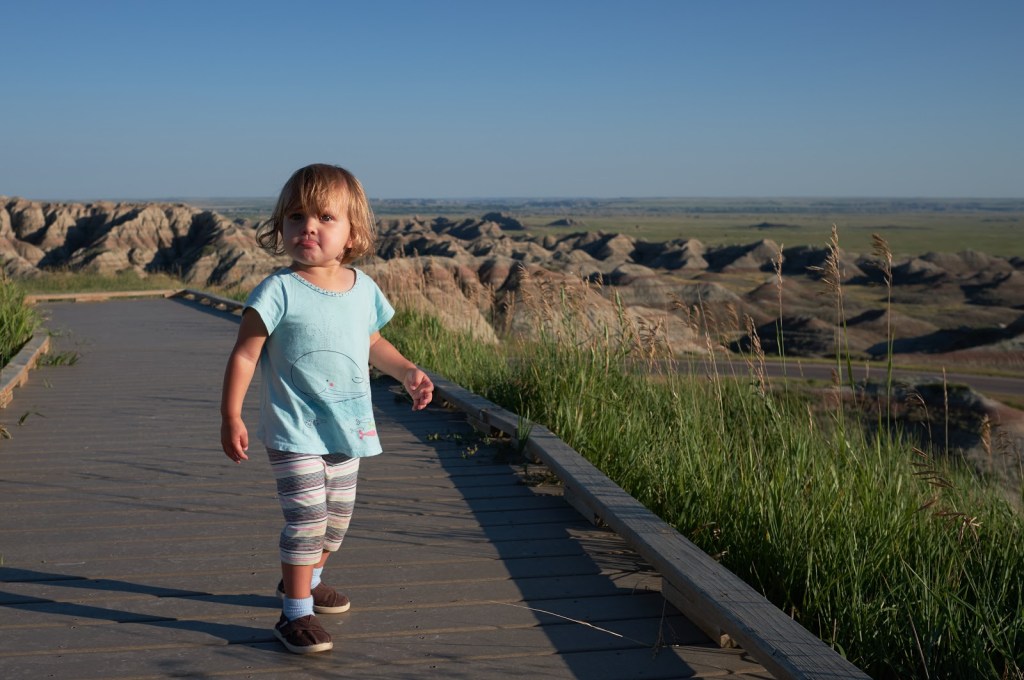
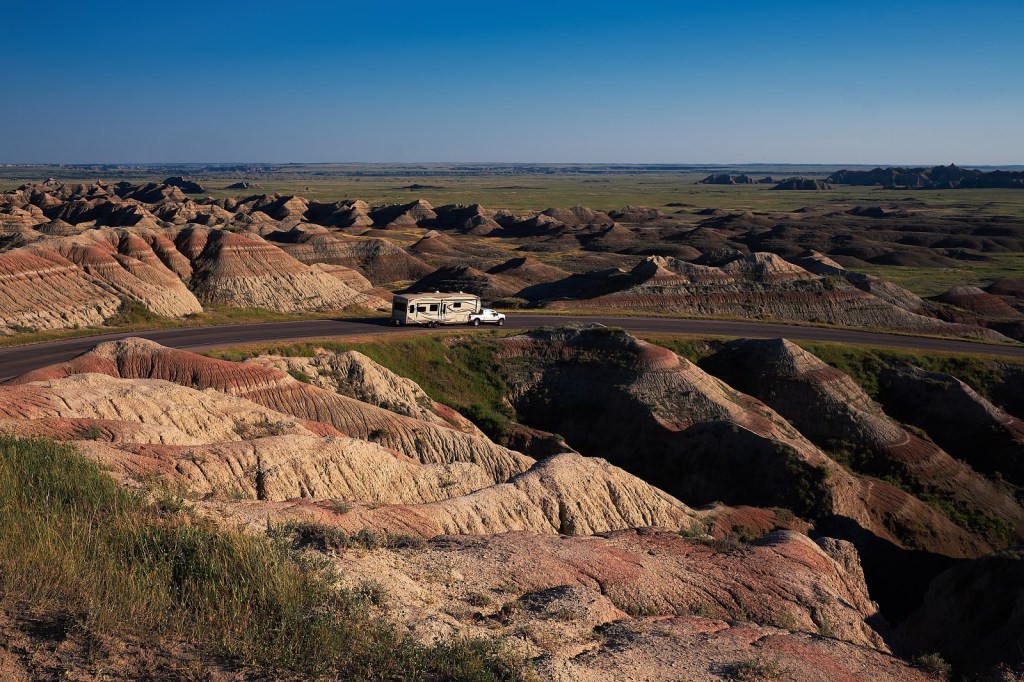
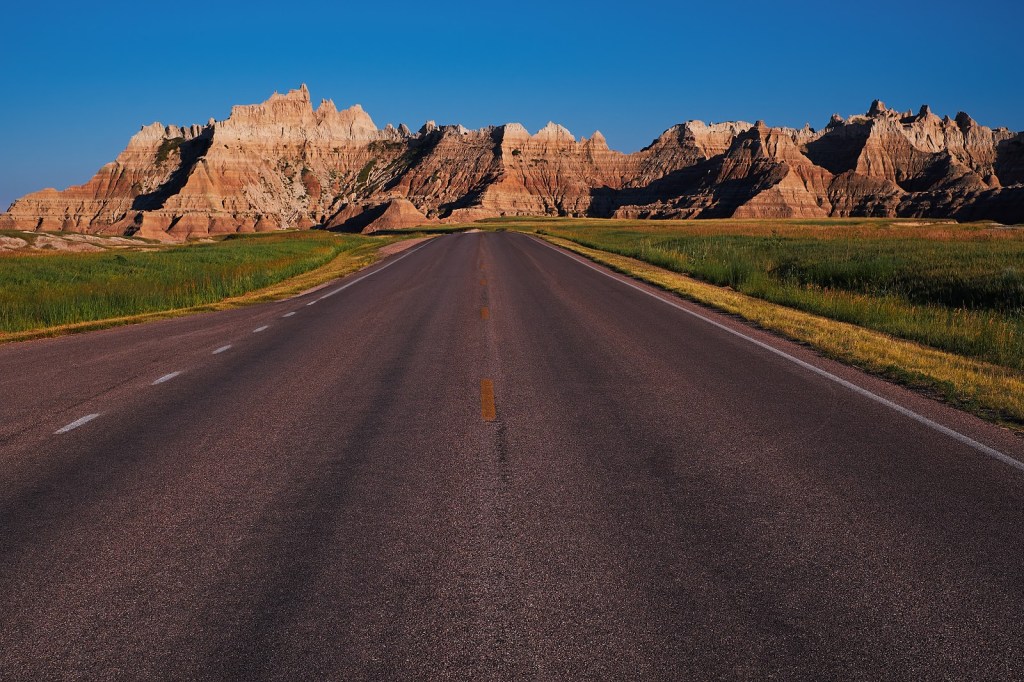
Sometimes it helps to photograph a familiar object or human element to add scale and perspective to landscape photos.
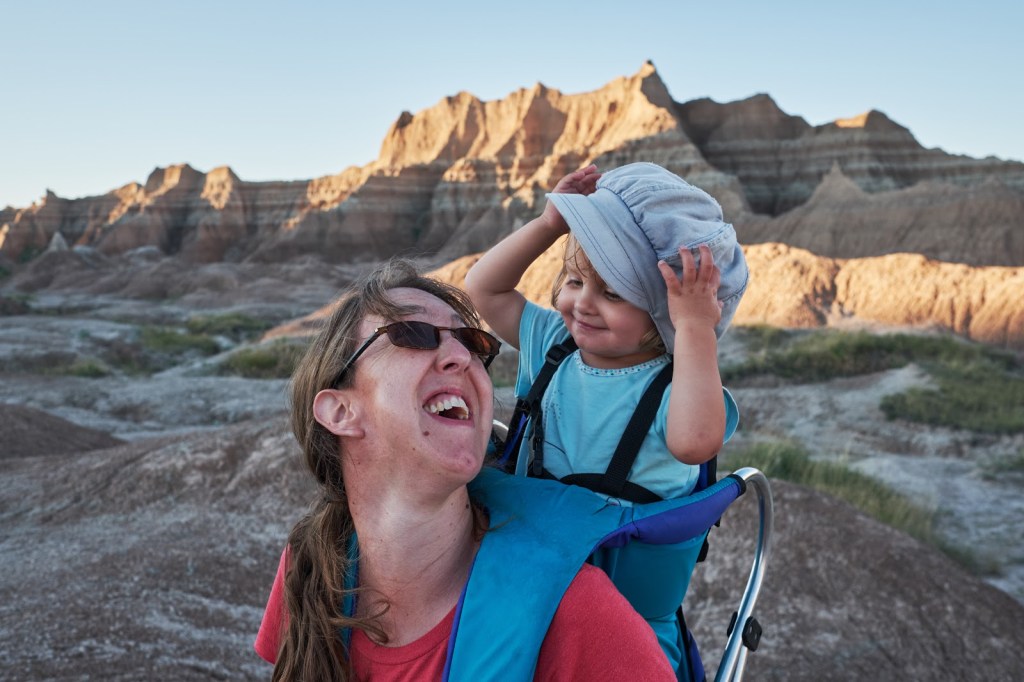
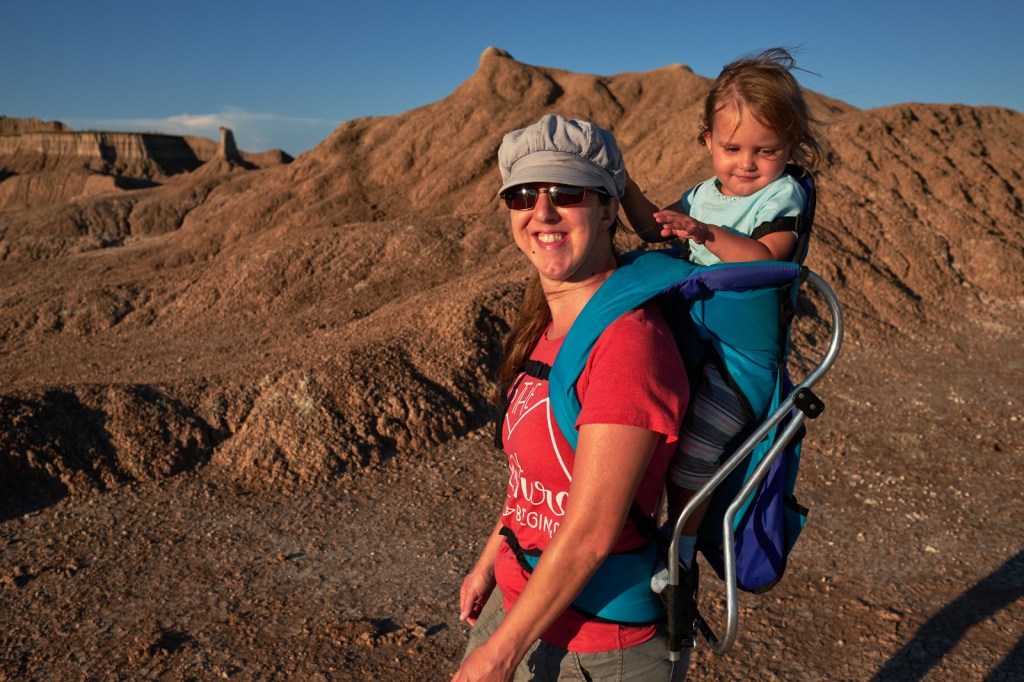
After our picnic, we headed to Castle trail to romp around a bit. This gave me opportunities to get some photos of the landscape from unique perspectives (as opposed to from the established outlooks parking areas) and photos of my family in the elements.
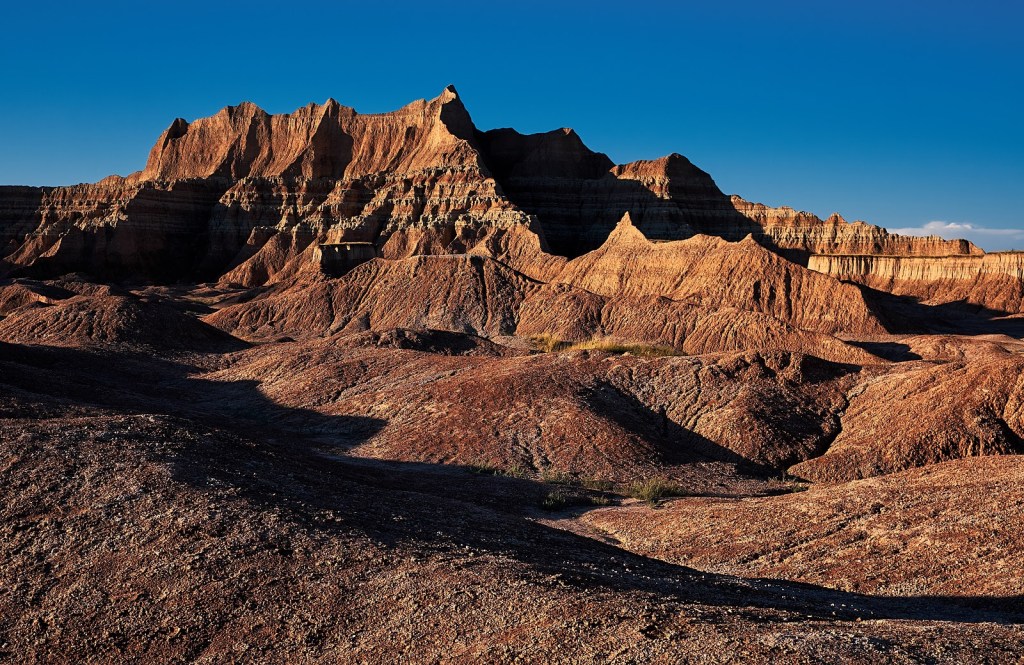
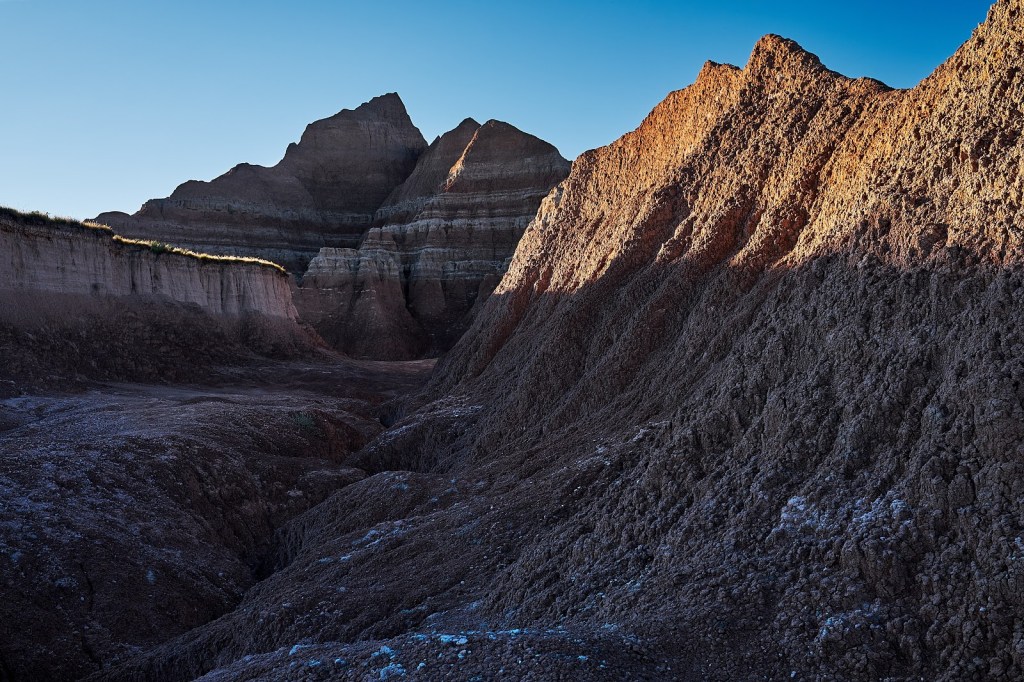
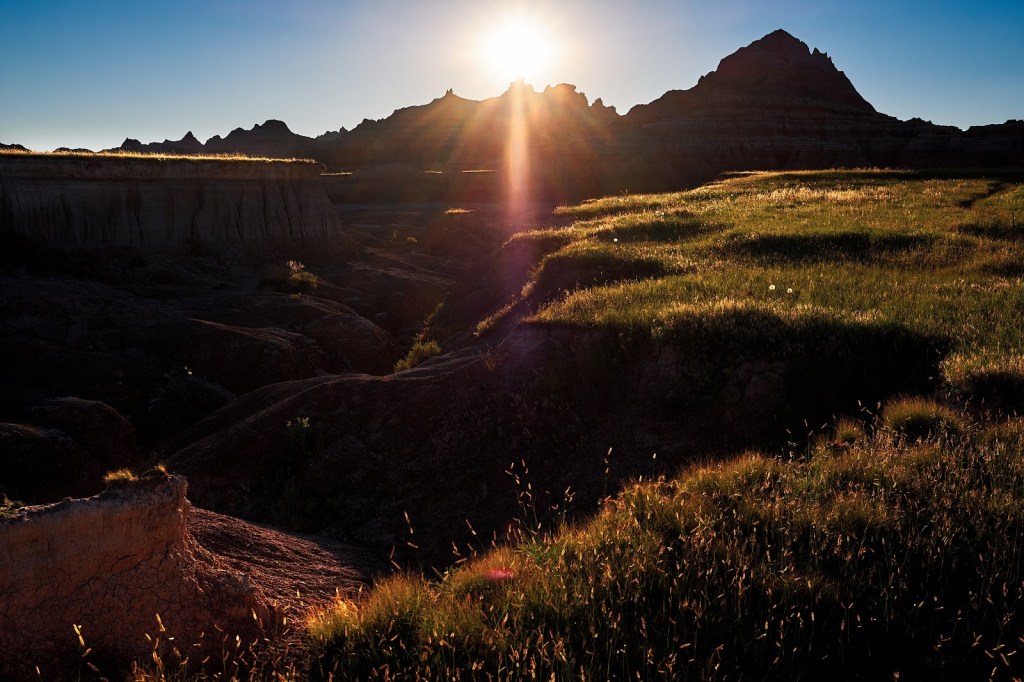
And finally, we hurried back to the Pinnacles overlook for the last few minutes of a wonderful sunset.
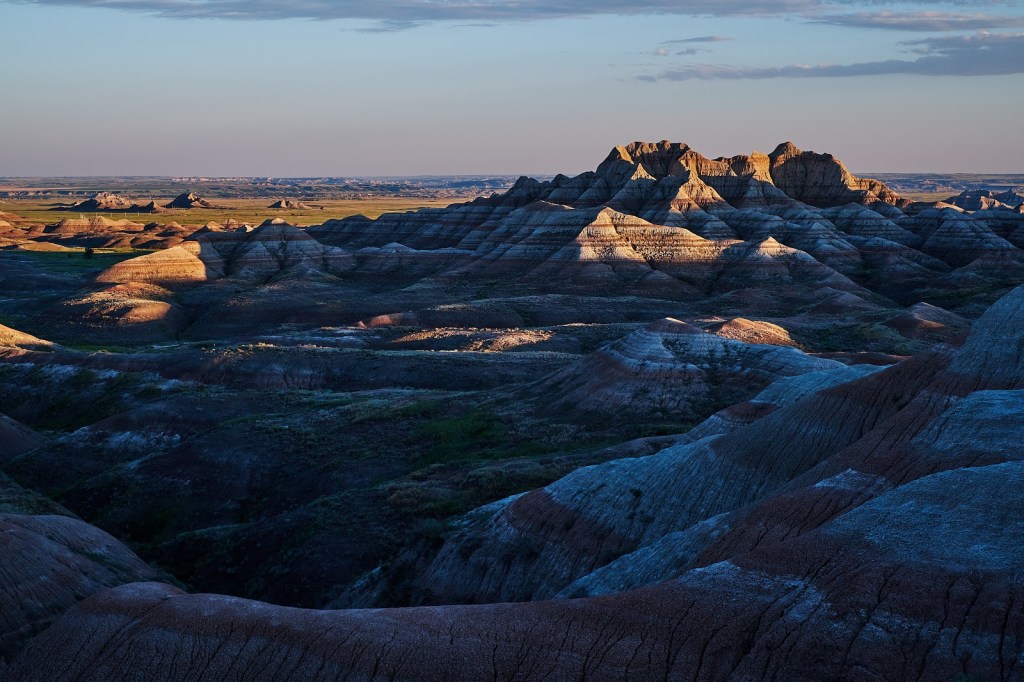

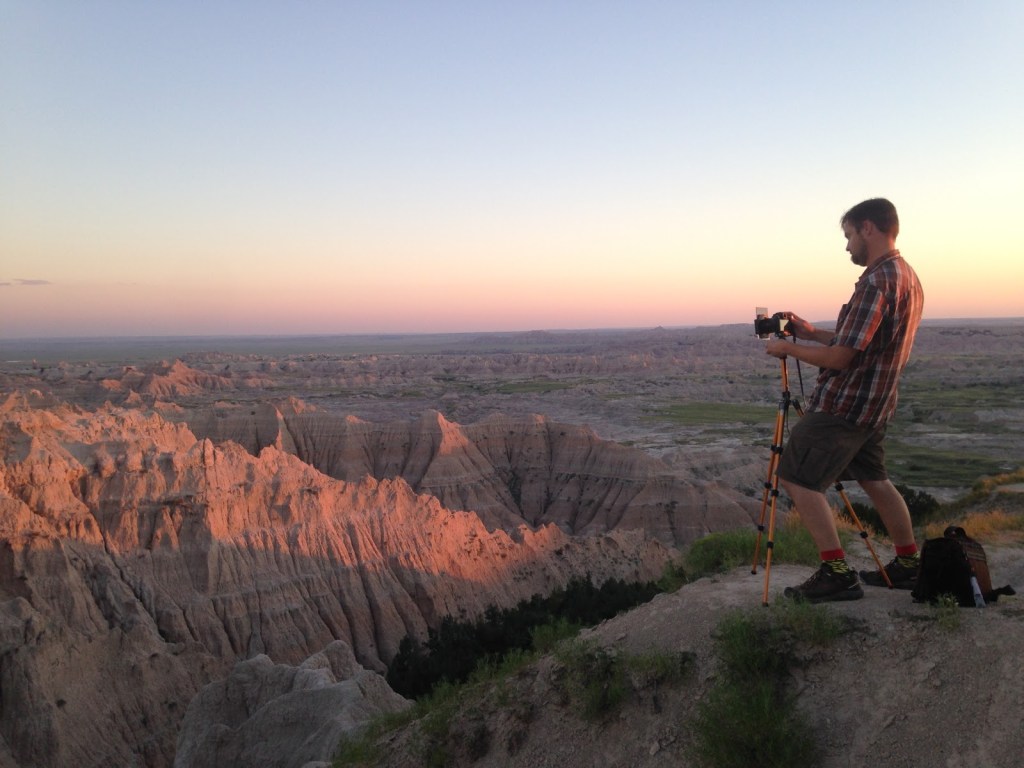
I would highly recommend visiting the Badlands to anyone – especially those looking for a good landscape photography experience. But please remember to enjoy the moment and those you are sharing it with.


 Justin Sheely
You must be logged in to post a comment.